8
min read
From Manual RMA Handling to a Fully Managed Process: Spes Medica’s Transformation


Spes Medica is a global supplier of medical devices, with a team of around 100 employees. As the company continues to grow across multiple locations, the need for structured and scalable processes became increasingly important.
“The platform not only improved our internal efficiency, but also created a more transparent and independent experience for our customers. At the same time, it gives us the scalability we need to support our growth across multiple locations.” Giorgio Facco, Regulatory Affairs & Quality Assurance Manager
Spes Medica’s Return Material Authorization (RMA) process was largely manual.
Customer requests were submitted through Google Forms, and from there, the team handled everything manually. Tracking requests, managing communication, and ensuring completion required constant coordination.
This led to limited visibility, higher risk of errors, and unnecessary time spent on administrative work. There was no single system managing the process end to end.
Orcanos worked closely with Spes Medica to understand how their process functioned in practice.
Instead of replacing it with a generic workflow, the existing process was rebuilt בתוך the platform in a structured and automated way.
This included a clear RMA submission flow, defined stages from request to completion, assigned responsibilities, and full traceability throughout the process.
Everything was centralized into one system, eliminating the need for multiple tools while keeping the logic of their original workflow intact.
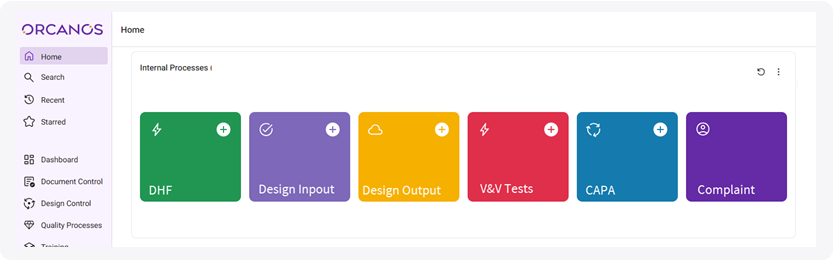
Spes Medica moved from a fragmented, manual workflow to a fully managed RMA process.
Today, all RMA activities are handled within Orcanos. Every request is tracked from start to finish in a structured way, and the team operates within a single platform.
This significantly reduced manual work and improved overall visibility and control. Orcanos became their central system for managing RMA from beginning to end.
Beyond the immediate operational improvements, the implementation introduced meaningful gains in efficiency, monitoring, and data usability across the organization.
Processing times improved as delays caused by manual coordination and disconnected tools were reduced. At the same time, real-time visibility into each request strengthened process control, making it easier to track statuses, responsibilities, and identify bottlenecks early.
Data is now organized, consistently available, and easier to interpret. This supports better internal decision-making and reduces the need for manual follow-ups or data handling.
From a customer perspective, the experience has also improved. Customers can manage their requests more independently, with less reliance on back-and-forth communication. This leads to faster responses and a smoother overall interaction.
The cloud-based architecture also enables Spes Medica to scale efficiently. With operations across multiple sites and ongoing international growth, the platform ensures consistent processes and centralized control while allowing access from anywhere.
As the company expands, new workflows, teams, and locations can be added without introducing additional complexity.
At the same time, all activities are managed within a framework aligned with international regulatory requirements. Data integrity, traceability, and validated electronic signatures are maintained, allowing Spes Medica to stay compliant while benefiting from a more efficient and digitalized environment.
Spes Medica chose Orcanos for its flexibility and ability to adapt to their existing workflow.
They did not need to change how they work. Instead, they were able to transform their current process into a structured, scalable system.
Following the successful implementation of the RMA process, Spes Medica expanded their use of Orcanos to additional workflows.
Processes that start with simple tools like forms and spreadsheets can quickly become inefficient as a company grows.
With the right system in place, teams can reduce manual work, improve visibility, and build processes that scale with them.